


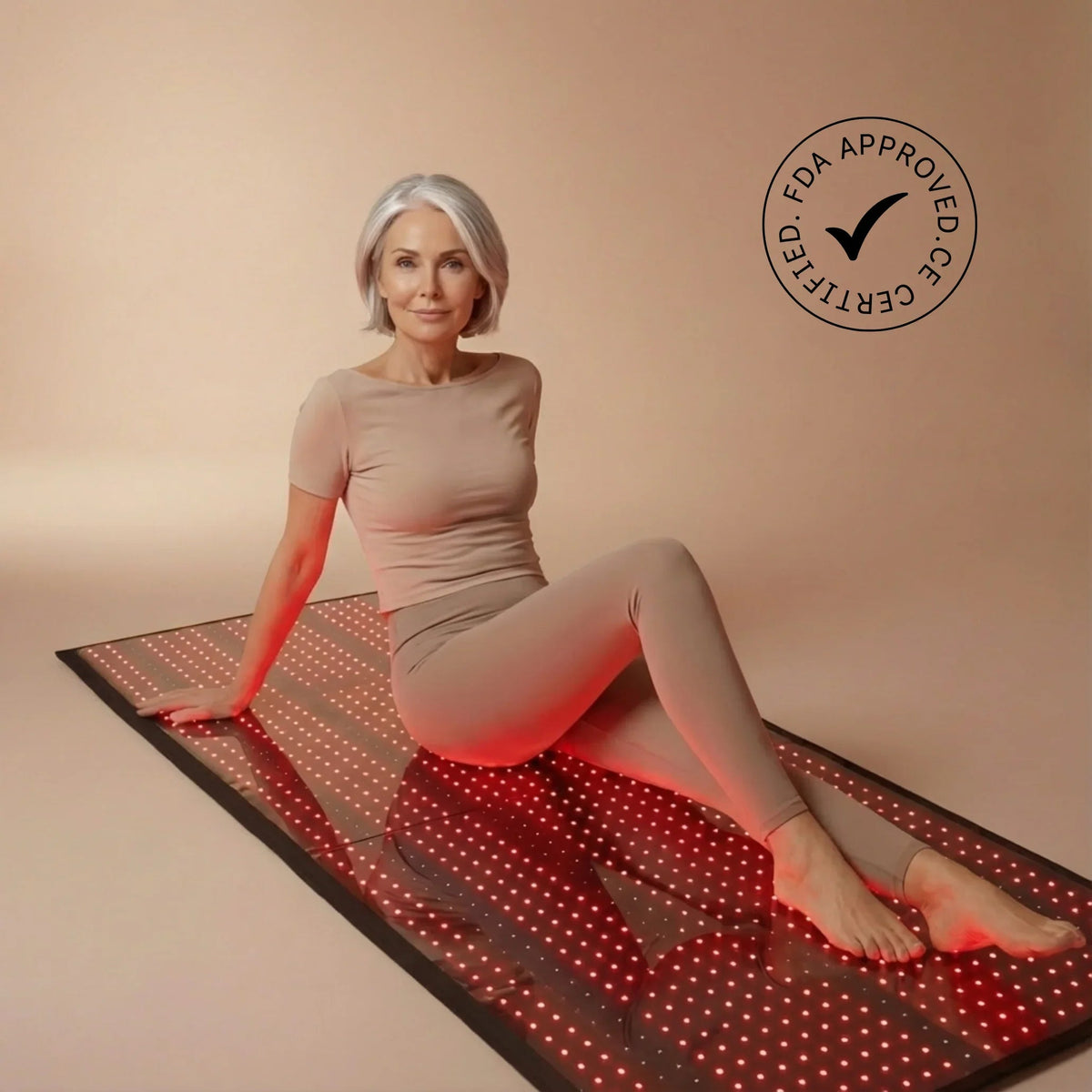
Red light therapy cost
Red Light Therapy Cost: Clinic Sessions vs Devices at Home
The short answer: Red light therapy cost in a clinic ranges from $25 to $200 per session, with a national average of $55.[1], [2] Results come from several sessions over weeks or months, so at two sessions a week a year in a clinic adds up to about $5,720. An at-home device is a one time purchase: every device in our selection costs less than that first year, and the whole household can use it.

Clinic sessions
How much does a red light therapy session cost?
A session in a clinic, spa or gym costs $25 to $200, depending on the area being treated.[1] The national average is $55 per session, with most prices between $43 and $106.[2]
Red light therapy usually needs several sessions over weeks or months, and it is not usually covered by insurance.[1] That is why the cost per session adds up quickly.
Clinic vs home
Red light therapy cost: clinic vs at home
| Clinic sessions | At home device | |
|---|---|---|
| Price | $25 to $200 per session, $55 on average | One purchase, then unlimited sessions |
| A year of sessions (2 a week) | About $5,720 at the $55 average | The price of the device |
| Time | Travel, booking and waiting | 5 to 20 minutes at home, any time |
| How often | As often as you can book | As often as your manual recommends |
| Who can use it | One person per paid session | Everyone in the household |
| Insurance | Usually not covered | Some devices are HSA and FSA eligible |
Clinic prices from Brown University Health and CareCredit.[1], [2] A year of sessions: 2 sessions a week × 52 weeks × $55.
The long term math
When does a device pay for itself?
Divide
Device price ÷ $55 (the average session) = the number of clinic sessions it replaces.
Count your weeks
Divide that number by your sessions per week. At 2 a week, a device worth 20 sessions pays for itself in 10 weeks.
Add the household
If two people use it, it pays for itself twice as fast.
Keep going
After that, every session at home is free. No travel, no booking.

At home
How much does a red light therapy device for home cost?
Price depends on the format. Smaller devices for one area cost less. Full body devices cost more, and replace the most clinic sessions. Prices update automatically from our store.
| Format | What it treats | Our picks |
|---|---|---|
| Wrap, belt or knee pad | One area: legs, lower back, knees |
Nicebeam Therapy Belt · See current price Nicebeam Cordless Knee Pad · See current price Nicebeam Leg Wrap Pro · See current price |
| Face mask | The face |
Lumara VISO · See current price Nicebeam LED Face Mask · See current price |
| Flexible pad | Any area, in the size you need | Lumara Pad · See current price |
| Mat | Full body, lying down | Nicebeam Full Body Mat · See current price |
| Panel | Face and body, one area at a time |
Nicebeam LumaSpectrum 9 Pro · See current price Lumara Illuminate Red V2 · See current price |
Not sure which format fits you? See our best red light therapy devices by body area or compare a red light panel vs mask.
HSA and FSA
Can you use HSA or FSA funds for red light therapy?
Yes, for eligible devices. Red light therapy is not usually covered by insurance,[1] but some home devices can be paid with pre tax HSA or FSA funds.
In our store, the Lumara VISO and the Lumara Pad are HSA and FSA eligible.
What drives the price
Why a quality device costs more than a cheap one
FDA 510(k) clearance means the FDA reviewed the device for a specific use. FDA registration means it is listed with the FDA.[3] Lumara VISO is FDA 510(k) cleared.
Red plus near infrared, or several wavelengths in one device, like the nine in the LumaSpectrum 9 Pro.
Quality brands publish irradiance with the distance it was measured at. Cheap devices often don't.
More LEDs over a larger area. The Full Body Mat has 3,840 LEDs; the Illuminate Red V2 has 1,980 micro LEDs.
Up to 3 years on Lumara devices, with support from an authorized retailer.
Measured EMF, eye protection, timers and materials made for daily use.
Is it worth it?
Is red light therapy worth the money?
Yes, when you use it regularly. Results come from consistent sessions, and that is exactly where a device at home wins: no appointments, no travel and no cost per session.
Every device in our selection costs less than a year of twice weekly clinic sessions at the national average. Browse all red light therapy devices or read our red light therapy buying guide.
Frequently asked questions
Red light therapy cost FAQs
In a clinic, a session costs $25 to $200 depending on the area treated, with a national average of $55. At home, you pay once for the device and use it as often as the manual allows.
Between $25 and $200, depending on the area treated. The national average is $55 per session.
It depends on the size and the technology. A small wrap or belt costs less than a mask, and a mask less than a full body mat or panel. See the current price on each product page.
A quality LED mask is one of the most affordable formats, and many cost less than a few months of clinic sessions. See the current price of the Lumara VISO and the Nicebeam LED Face Mask on their product pages.
Clinic beds are paid per session, within the $25 to $200 range. For full body sessions at home, a mat or a panel gives you similar coverage without the appointments.
Usually not. Some devices, like the Lumara VISO and the Lumara Pad, are HSA and FSA eligible.
Yes, if you use it regularly. Every device in our guide costs less than a year of twice weekly clinic sessions at the national average, and the whole household can use it.
Sources
Sources and methodology
Reviewed October 1, 2026. Clinic prices come from the sources below. Device prices update automatically from our store.
- Leduc K. Red light therapy: benefits, safety and things to know. Brown University Health. April 15, 2025. brownhealth.org.
- CareCredit. What is light therapy? Types, pricing and how it works. December 13, 2024. Data: 2024 Synchrony Average Procedural Cost Study. carecredit.com.
- US Food and Drug Administration. Are there “FDA registered” or “FDA certified” medical devices? How do I know what is FDA approved? FDA consumer guidance.

About the founder
Nacho González
I’m Nacho González. I built Kinaura Life as the store I wanted to find myself: every product with a reason to exist, service that matters as much as what we sell, and one goal, supporting better living, for longer. Behind it, a passion for digital marketing that has spanned my entire professional life, the last 10 years of it in health.
If you need help choosing, call (302) 208-4650 or email hello@kinauralife.com.
